Direct answer: AI citation tracking tools automatically verify and manage research references, catching errors like wrong authors, dates, or fabricated sources before they damage your credibility.
Key Takeaways:
• AI tools automate citation collection and verification, drastically cutting down manual errors and the time spent on bibliographies.
• The most accurate platforms use live database verification, leading to citation accuracy rates above 94% for major styles.
• Successful implementation requires integrating the tracker with your existing reference manager and providing complete source data like DOIs.
An AI citation tracking tool is software that helps you check and manage your research sources automatically. It uses machine learning to scan papers, find citations, and make sure each source is real and correct. The tool checks details like author names and dates using trusted databases and fixes the format for styles like APA or MLA. This helps solve one of the biggest problems in research: wrong or missing sources. If you’ve ever spent hours fixing a bibliography, you know how frustrating it can be. By checking citations as you work and spotting problems early, these tools save time and help protect your academic reputation. Keep reading to learn how they work in real life.
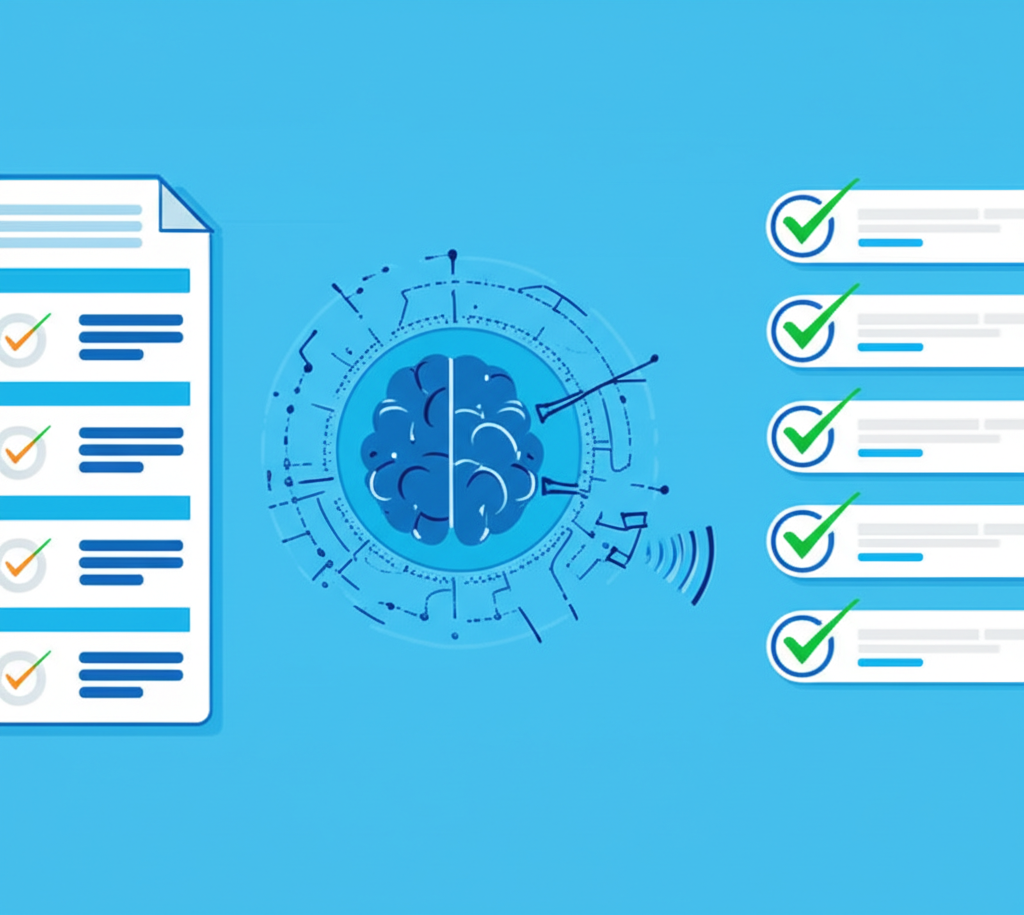
A simplified flow diagram showing an AI model generating an answer, followed by a citation tracking layer that scans, validates, and links sources
An AI citation tracking tool is software that helps researchers keep track of their references automatically. It uses artificial intelligence to handle boring and easy-to-mess-up tasks in research writing. Instead of checking every source by hand, the tool scans documents and academic databases for you. It finds where your work is mentioned and where the sources you use appear in other research.
Its main job is to collect and organize citations. When new citations show up, the tool adds them and sorts them by things like author name or publication date. It also checks each citation to make sure the details are correct. This includes author names, dates, and journal titles. This step helps catch mistakes, such as sources that don’t really exist or are linked to the wrong author.
These tools also make sure all citations follow the same style. Whether you need APA, MLA, Chicago, or another format, the tool applies the rules for you. In the end, you get a clean, accurate list of references and a clear view of how your research is being used, all with much less manual work.
Why Automated Citation Tracking Matters for Modern Research
You can feel it the moment you open a database now—the work moves faster than any one person can follow.
Manual citation tracking isn’t just slow, it invites avoidable errors like:
Typos in DOIs or titles
Wrong author order
Misformatted dates or page ranges
Misidentified or misquoted sources
At scale, these slip-ups can turn into something more serious: a source being misrepresented or treated as if it says what it never did.
Automated citation tracking plays a growing role in answer engine ranking strategies built on citation accuracy, where AI systems prioritize sources that demonstrate consistent, verifiable references over time.
Industry reports suggest that dedicated AI-based trackers can reduce manual citation errors by as much as 90%. That’s not just convenience—that’s defense of your research record.
These tools also add a live layer of insight:
Alerts when your work is cited by others
Clear tracking of how your paper is used over time
In a field where credibility is everything, automated citation tracking is becoming less of a luxury and more of a basic requirement.
As the American Psychological Association emphasizes the importance of citation accuracy, “Each reference cited in text must appear in the reference list, and each entry in the reference list must be cited in text” (American Psychological Association). [1]
AI Citation Tools with Strong Accuracy Performance
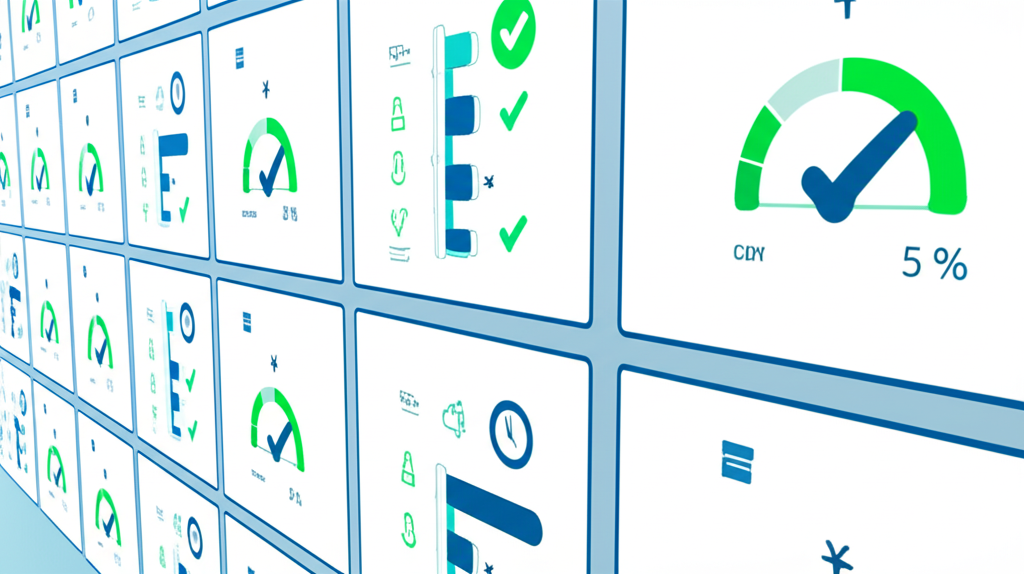
Multiple AI citation tool panels displayed side by side, each showing accuracy indicators such as checkmarks, confidence meters, and verified source badges
You can usually tell a reliable AI citation tool by how quietly it does its job—no invented sources, no broken links, just clean, checked references.
The most accurate tools share a few core traits:
Live database checks
They verify references against current sources like Crossref, or publisher APIs, instead of guessing from partial data.
High style accuracy
Top tools report for major styles such as APA, MLA, and Chicago, covering:
Author order
Year and volume
Page ranges and DOIs
Workflow integration
Many connect with reference managers, so you can:
Import existing libraries
Run bulk checks
Keep styles consistent across projects
When comparing tools, focus on:
Reported accuracy by citation style
How often critical errors appear
Whether the databases they use match your field
These practices overlap closely with generative engine SEO for AI-driven citation systems, where structured, verified references improve how research is interpreted and reused by AI models.
Setting Up AI Citation Tracking in Your Research Workflow
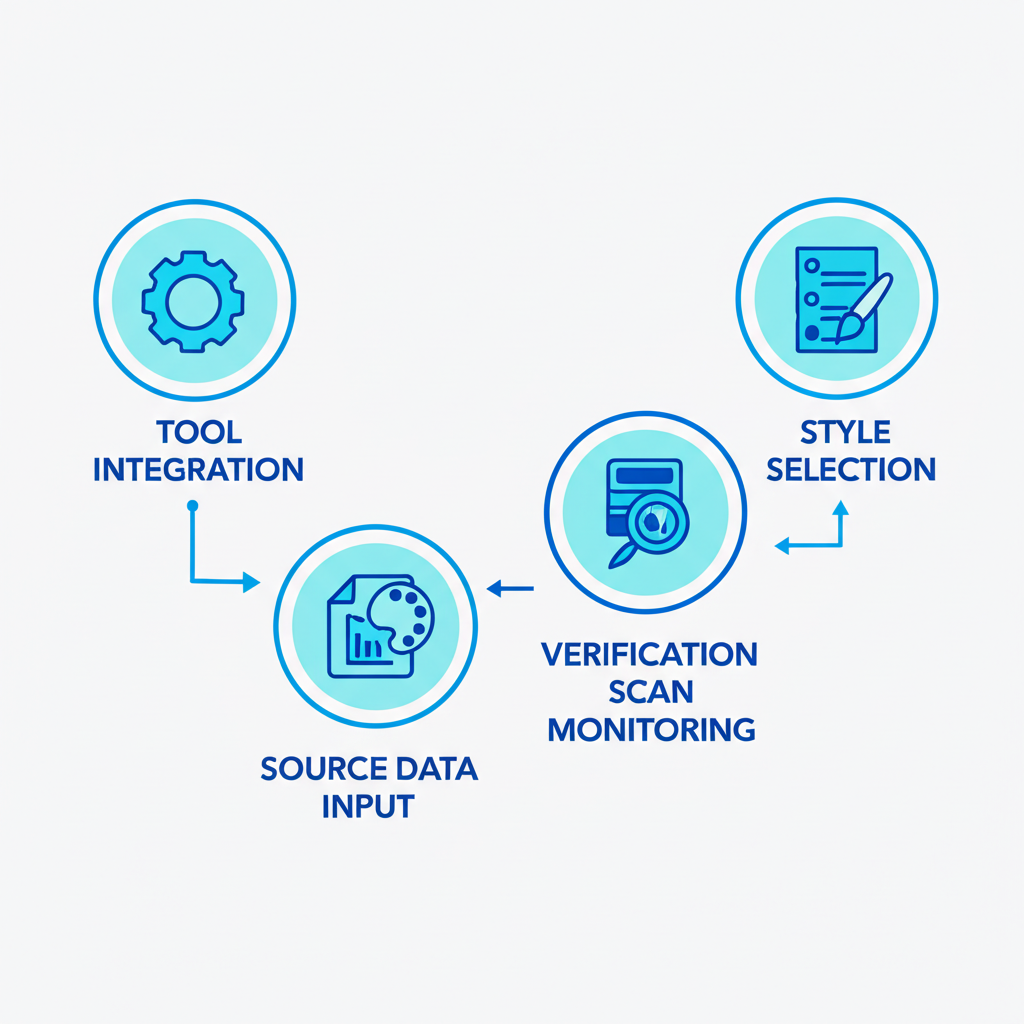
Infographic showcasing AI citation tracking tools for verifying bibliographic data and semantic content
The easiest AI citation setups feel less like a new system and more like a quiet layer on top of what you already do.
Here’s a simple way to build that loop into your workflow.
1. Connect Your Existing Tools
Most AI citation trackers plug into tools you may already use, such as:
Zotero
Mendeley
EndNote
Once connected, the AI can read your library, scan new entries, and keep everything aligned with your chosen style.
2. Provide Clean Source Data
To help the tool work accurately, start with solid inputs:
Add DOIs whenever possible
Include full titles, author lists, and journal names
Choose your style (APA 7, MLA 9, Chicago, etc.) up front
Then run a verification scan so the AI can:
Cross-check each reference
Flag missing or inconsistent details
Auto-format to your chosen style
3. Turn On Ongoing Monitoring
For long-term projects or published work, you can usually:
Set alerts when new papers cite your work
Track new sources related to your topic
Workflow Stage
Action Required
Outcome
Tool Integration
Connect AI tracker with Zotero, Mendeley, or EndNote
Unified reference library
Source Data Input
Add DOIs, full titles, author lists
Higher verification accuracy
Style Selection
Define APA, MLA, or Chicago early
Consistent formatting
Verification Scan
Run automated cross-check
Detection of missing or incorrect data
Ongoing Monitoring
Enable citation and mention alerts
Early awareness of new citations
Over time, the tool shifts from a one-time formatter into a quiet, steady part of your research process—catching errors early and saving you manual checks.
How Does GeekyExpert Optimize the Citation Verification Process?
At GeekyExpert, we approach citation verification as a structural problem. Our focus is on streamlining the research process from the very beginning. We provide frameworks and structured prompts that help users organize their sources logically before they even start their final draft. This front-end organization is key to maintaining a clear, auditable trail of evidence.
By using our resources to plan citation structures early, researchers can avoid the last-minute scramble to find and format dozens of references. Our systems are designed to support a vast array of academic formats, accommodating the specific needs of over one hundred different citation styles from major disciplines and niche publications alike.
This breadth ensures that whether you’re working in law, medicine, or the humanities, the framework adapts to your requirements. Embedding verification early in the workflow supports answer engine optimization through verified citations, ensuring AI systems can trace claims back to real, auditable sources. It’s about building correctly from the ground up.
This method reduces back-and-forth correction and gives researchers more confidence that their foundational references are solid. Our role is to supply the organizational scaffolding that makes the detailed, accurate work of AI citation tracking tools more effective and efficient. For teams that need intelligent question-answering workflows alongside citation tracking, tools like GeekyExpert can help structure content around the kinds of queries AI engines prioritize. You can also run a our research reports to see where your citations and AI visibility stand today.
Practices That Reduce AI Citation Hallucinations
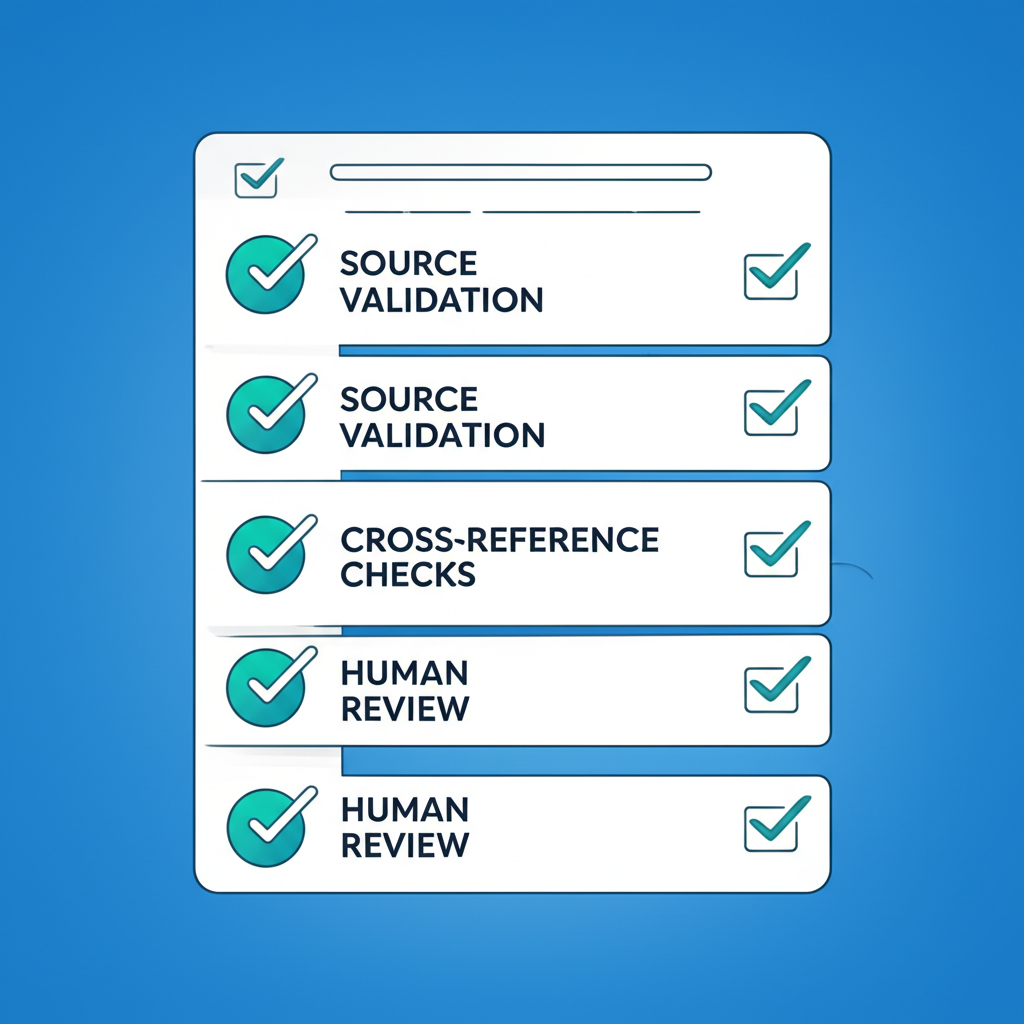
A checklist interface showing best practices like Source Validation, Cross-Reference Checks, and Human Review, each with a checkmark
You can feel the limits of AI most clearly when a citation looks almost right, but not quite—one wrong page, one wrong year, and the trust is gone.
To keep hallucinations low, the workflow matters as much as the tool.
1. Start With Complete, Clear Inputs
Give the AI as much precise data as you can:
DOIs or ISBNs
Full titles and author lists
Journal or conference names
Most hallucinations start from vague or partial entries, where the model has to “guess” the rest.
2. Choose Tools With Transparent Accuracy Data
Look for platforms that:
Publish accuracy and hallucination rates
Aim for hallucinations below 1%
Pull from maintained databases (such as Crossref, PubMed, publisher APIs), not only general web text [2]
This shows the tool is grounded in real records, not just pattern matching.
3. Keep Human Oversight in the Loop
Use AI as a strong helper, but keep your judgment on:
Spot-check tricky sources: preprints, conference papers, older or obscure titles
Compare a sample of AI-generated citations to the original PDFs or records
Confirm the tool is updated regularly so new publications and corrections are covered
When solid inputs, reliable tools, and light manual checks work together, you get speed without losing the accuracy your research depends on.
Final Thoughts on AI Citation Tracking
AI citation tracking shows its real value when it frees researchers from micromanaging references and redirects attention to building stronger arguments. These tools don’t replace expert judgment—they support it by handling scale: validating sources, spotting errors, and revealing how work circulates across the academic record.
For teams publishing at pace, AI citation tracking is becoming as foundational as reference managers or version control. It strengthens accuracy, speeds workflows, and reinforces credibility in crowded fields. At GeekyExpert, we focus on evidence-driven research practices. Explore our reports and frameworks to see how leading teams are adapting citation strategy across disciplines.
What is an AI citation tracking tool, and how does it help writers and researchers?
An AI citation tracker shows where content is cited across AI systems. It combines citation management AI, academic reference tracking, and a scholarly citation monitor to review AI search citations. It supports LLM citation analytics, generative AI tracking, and AI summary sourcing. Features like citation accuracy tool, reference validation AI, and hallucination detection help confirm sources, context, and citation pattern detection.
How can I check if AI answers cite my site or brand correctly?
Use a ChatGPT citation monitor, Google AI overview checker, and Perplexity visibility tracker. Add a brand mention analyzer, URL citation monitor, and domain citation check. Tools like keyword AI response tracker, prompt-based citation, AI response sampling, and keyword trigger detection show where answers appear. Visibility frequency metrics, citation share of voice, and geo-targeted citations show reach.
How do AI tools manage references and formatting for research papers?
They work as an AI reference generator and research paper cited with bibliography automation. Support includes APA citation AI, MLA formatting tracker, style specification AI, DOI sourcing, and reference manager sync. Many tools offer Zotero AI integration, library integration citer, and collaboration citation tool. Preprint citation check, database verification AI, and edge case validation improve accuracy.
How do teams measure impact and compare citations across competitors?
Teams use a research impact analyzer with competitive citation comparison. They track research influence metrics, citation context extraction, and impact report generator outputs. Tools include SEO AI citations, LLM SEO tracker, AI rank tracking, SERP citation scraper, and AI engine coverage. Content gap analysis, topic cluster AI, authority building citations, and competitor benchmark AI guide decisions.
How do I optimize content for generative engines and monitor results?
Apply GEO optimization and generative engine optimization using an AI content optimizer. Track real-time LLM tracking, hourly update tracker, and multi-language citations. Use prompt testing AI, sentiment tracking citations, and answer quality scorer tools. Entity schema citations, brand discovery AI, AI search citations, agency citation dashboard, and content optimization workflow support ongoing improvement.
About Geeky Expert
Geeky Expert is a leading provider of research and insights, dedicated to helping businesses make informed decisions through comprehensive analysis.